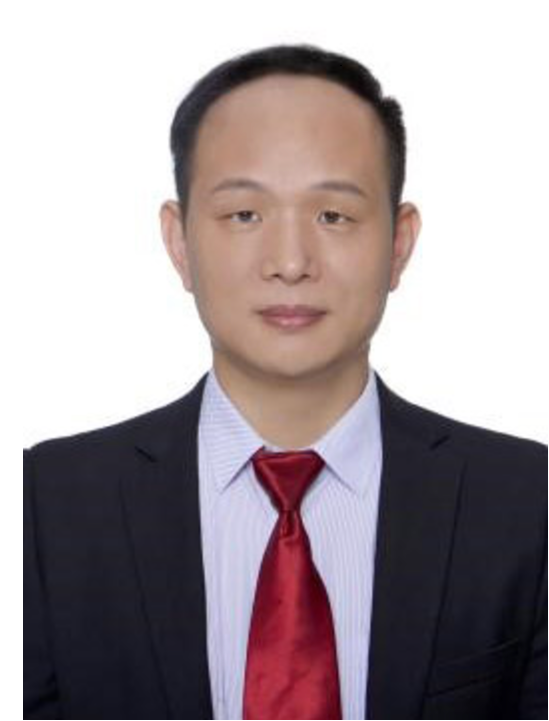
Peiyan Song

From the perspective of knowledge organization and open-source intelligence, methods such as natural language processing and deep learning are used to identify domain experts and teams. It accurately recognizes, evaluates, and recommends their research expertise, influence, activity, authority, growth, mobility, international cooperation, responsible review and avoidance relationships, research integrity, and ethical risks, providing decision support for government departments, science parks, and tech enterprises in talent recruitment, cultivation, utilization, and retention.

From the perspective of knowledge organization and discovery, it semantically and normatively translates, organizes, and maps scientific and technological terminology resources released by international organizations such as UNESCO and FAO to form a multilingual terminology knowledge base. It further uses natural language processing to conduct cross-language translation, semantic mining, and dynamic analysis of policy documents, reports, archives, and statistical data, providing decision support and policy advice to enhance China's voice in international organizations and offering multilingual knowledge services.

Based on ancient corpora, literature and terminological databases, this study leverages knowledge organization and NLP methods to extract scientific terms and professional knowledge from rare ancient books and build reliable knowledge graphs. It explores the structuring, systematic arrangement and intelligent exploitation of ancient texts to advance ancient book conservation and enable ancient scientific knowledge to serve modern society.

From the interdisciplinary perspective of library science, linguistics, education, psychology, and data science, it explores data-driven methods for hierarchical reading ability portraits of primary and secondary school students. AI is used to improve person-book matching, thus perfecting reading theories and evaluation systems, enhancing students' deep reading abilities, and better serving the construction of scholarly campuses and society.